
International Relations Department Community Service
The International Relations Department at the Faculty of Social and Political Science, Universitas Padjadjaran, has been actively engaged in a myriad of community service initiatives, exemplifying its commitment to societal betterment. Through a range of impactful programs, the department has consistently sought to bridge academic expertise with practical solutions to address pressing issues in the community. From organizing workshops on global affairs to collaborating with local organizations on development projects, the department has fostered a culture of civic responsibility among its students and faculty. By leveraging their knowledge in international relations, the department has contributed to enhancing awareness, fostering dialogue, and implementing sustainable solutions that resonate beyond the academic realm. This dedication to community service not only enriches the learning experience for students but also underscores the university’s broader mission to make a positive impact on the world at large.
Batu Karas Paradiplomacy towards a Global Village: Regional Readiness in terms of Global Tourism
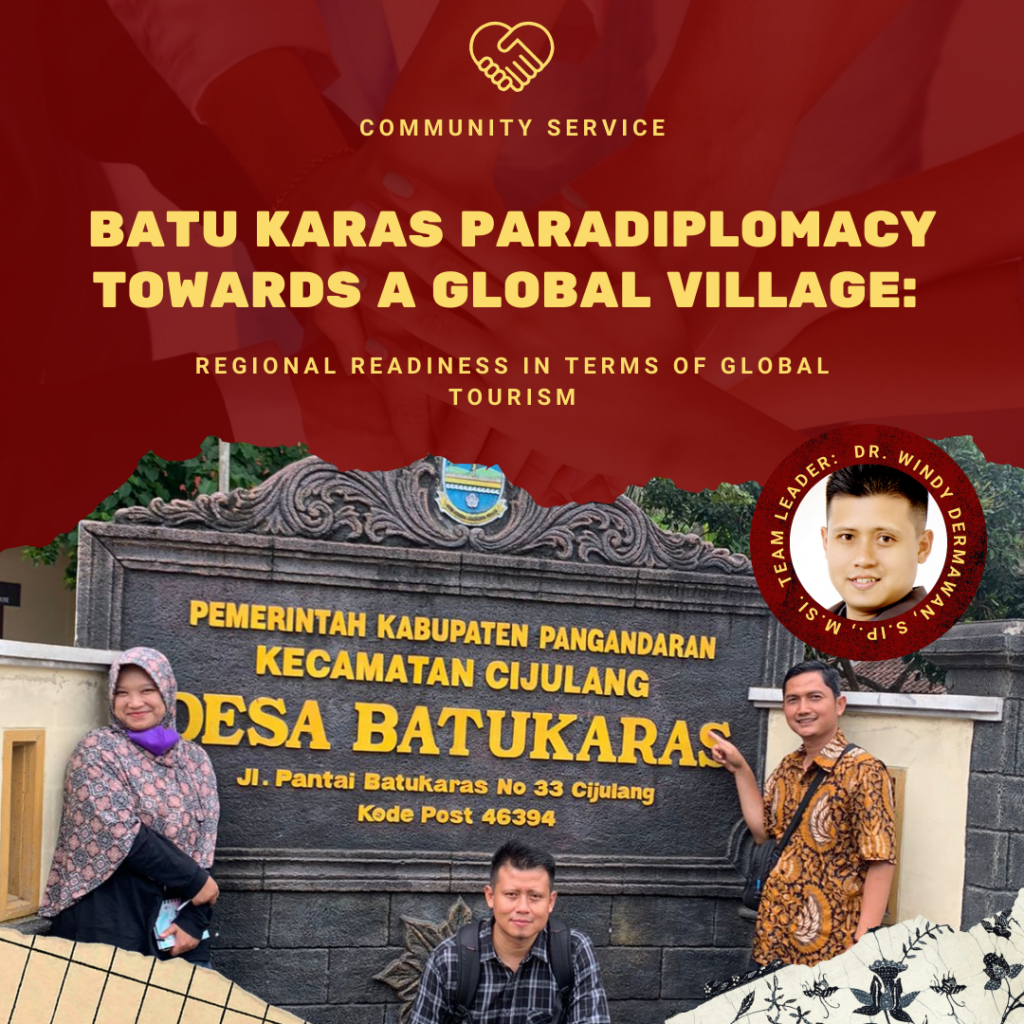
In a bid to harness its coastal riches for economic gain, Pangandaran, a region in West Java, has set its sights on becoming a tourism hub. At the forefront of this endeavor is Batu Karas, a village within Pangandaran, seeking to tap into both local and international resources through smart diplomacy.
Under the leadership of Dr. Windy Dermawan, a team is actively engaged in a community service initiative aimed at preparing Batu Karas for the global tourism stage. The strategy involves collaborating with local government representatives to introduce the village’s readiness for global tourism. Additionally, the initiative strives to familiarize stakeholders with the village’s ability to take action and manage affairs at the grassroots level, enhancing its diplomatic capabilities for holistic community development.
A key component of this effort is the crafting of a policy brief outlining the necessary steps for Batu Karas to thrive in global tourism. The initiative employs community education methods, using informational sessions to raise awareness and educate stakeholders about harnessing international resources through regional diplomacy, or paradiplomacy.
This community service project is not only a learning experience for the village but also serves as a platform for researchers to actively involve and empower the community. The goal is to instill a sense of awareness and participation among locals, including educators, community organizations, youth groups, and community leaders.
Driven by the principles of “Unpad Nyaah Ka Jabar” and aspiring to be “Unpad Bermanfaat,” the initiative focuses on three main objectives: identifying and exploring Batu Karas Village’s awareness of global tourism, introducing the village’s capacity to act and capability to manage at the local level, and developing a policy brief for the village government and research institutions.
Through these efforts, the community service initiative hopes to shed light on the pivotal role of regional diplomacy in unlocking Batu Karas Village’s potential to become a globally recognized tourist destination.
Team Leader: Dr. Windy Dermawan,S.IP., M.Si.
Team members:
- Dr. Gilang Nur Alam, S.IP., M.Sc.,
- Drs. Teuku Rezasyah, MA., Ph.D.,
- Drs. Ki Agus Zaenal Mubarok, M.A.P.,
- Dr. M. Hery Saripudin,
- Rizki A. Ramadhan, S.IP., M.Han,
- Viani Puspitasari, S.IP., M.M.,
- Fuad Azmi, S.IP., MAIR.
Bagolo Go Digital
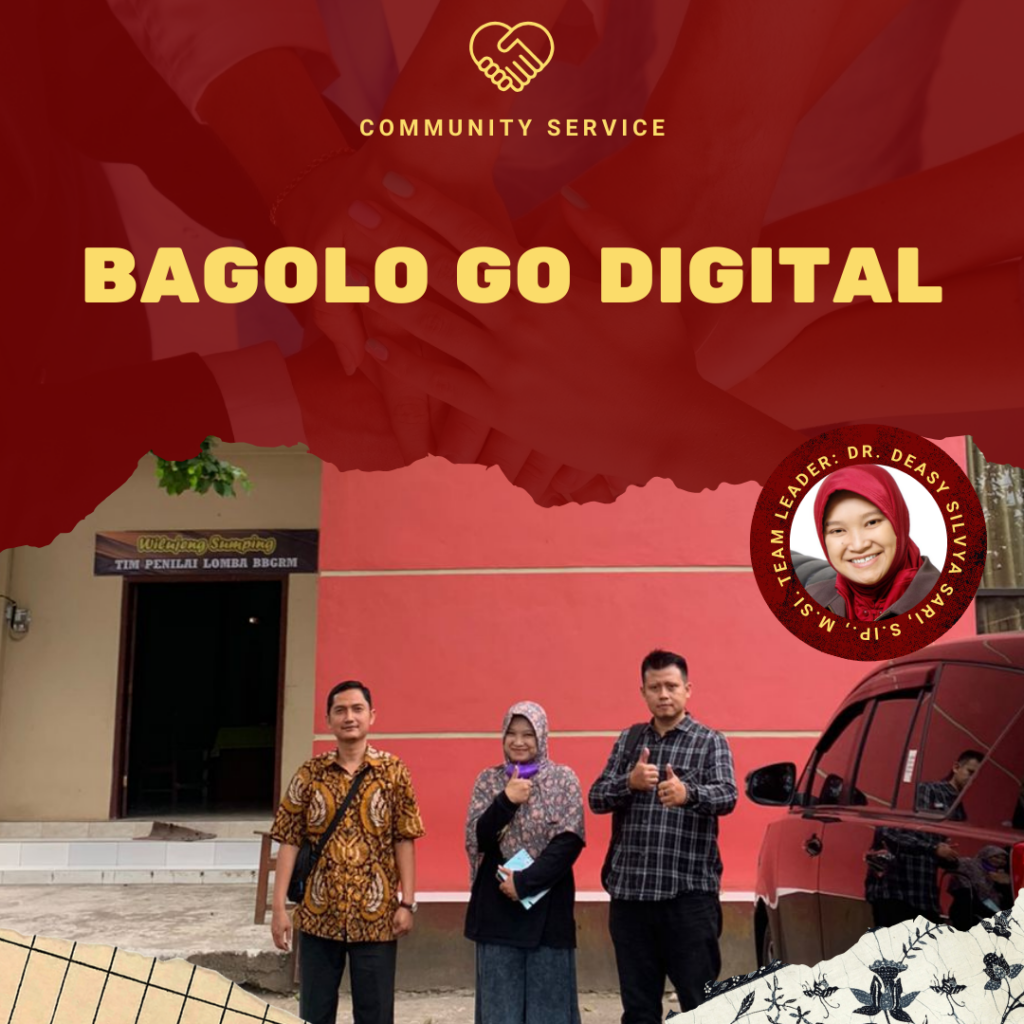
In an effort to bounce back from the challenges of the pandemic, Bagolo Village in Pangandaran is embracing the digital wave. Led by Dr. Deasy Silvya Sari, the community is gearing up for a three-year plan to showcase its natural wonders and boost the local economy.
With Indonesia focusing on digital solutions for global recovery, Bagolo Village is taking steps to create a digital footprint. The plan includes building an informative website in the first year to highlight the village’s potential, educating locals on maintaining the site. In the second year, an online marketplace will be set up for village products, making it easier for people to access and support local businesses. The third year will see the village stepping into the tourism e-commerce space, making its attractions available on popular travel websites.
Bagolo Village is not just a picturesque spot; it’s a treasure trove of natural beauty with places like Karapyak beach, Batu Kasur site, Jagadesa Springs, and more. This digital initiative aims not only to bring these attractions to a global audience but also to create economic opportunities for the local community.
The digital transformation involves using the internet, big data, and other technologies to boost the local economy. The goal is to work together—community, businesses, and government—to make Bagolo Village a digital success story. This initiative doesn’t just mark a technological shift; it’s a chance for Bagolo Village to shine on the world stage, showcasing its beauty and economic potential.
Team leader: Dr. Deasy Silvya Sari, S.IP., M.Si.
Team members:
- Chandra Purnama, Ph.D.,
- Prof. Arry Bainus,
- Affabile Rifawan, S.IP., M.Si.,
- Dina Yulianti,
- Siti Aliyuna,.
- Nuraeni, S.IP.,M.Si.,
Towards Champion Halal Tourism
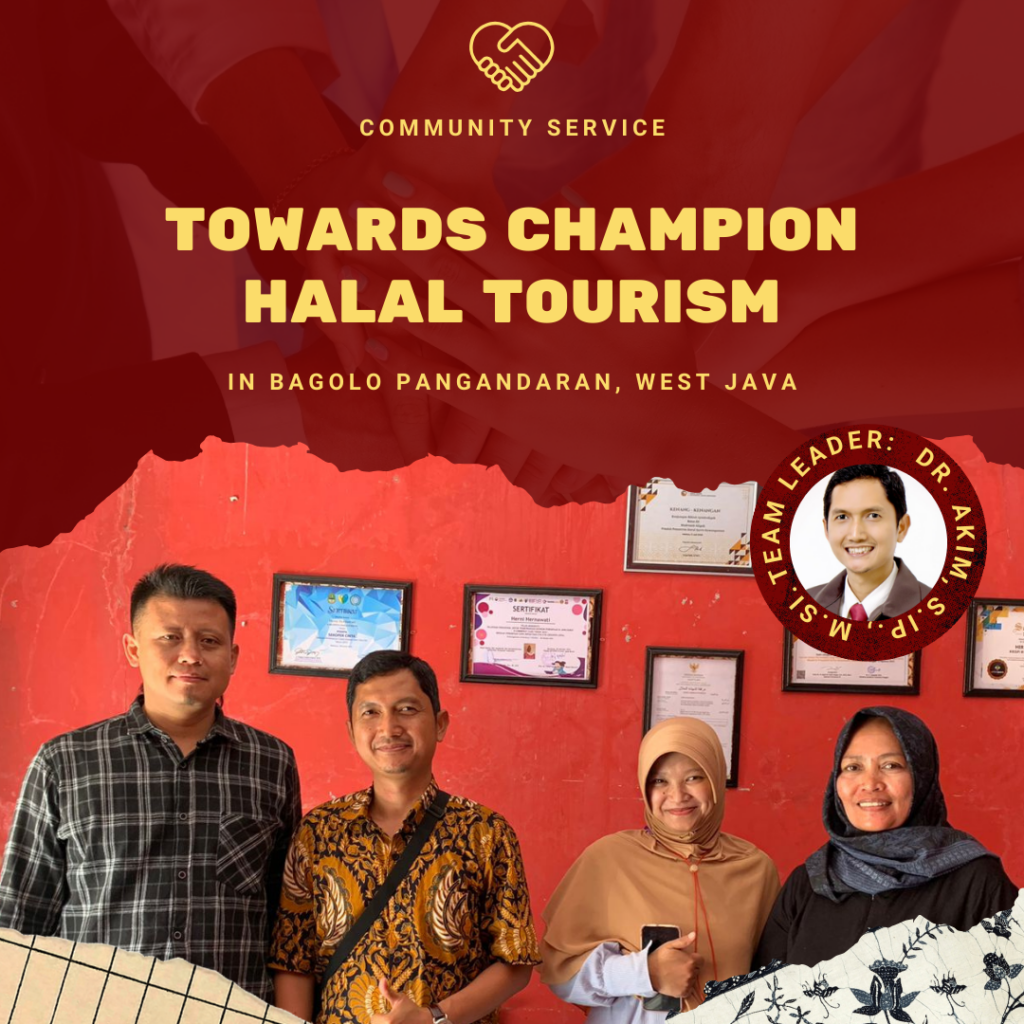
In a push to boost tourism and economic growth, Bagolo Village in Pangandaran, West Java, is gearing up to become a standout destination for halal tourism. Led by Dr. Akim, the community is embarking on a three-year plan to make Bagolo a welcoming place for Muslim travelers.
Halal tourism, a growing trend globally, focuses on providing services that align with Islamic principles. While Indonesia earned the top spot for halal tourism in 2019, West Java is aiming to climb the ranks. Bagolo Village, with its charming attractions, is the chosen location for a community project called PPM (Community Service), part of West Java’s larger plan to champion halal tourism.
The plan is divided into three stages, each focusing on different aspects of making Bagolo a top choice for Muslim travelers. The first stage aims to create a welcoming environment, especially regarding prayer facilities. In the second stage, efforts will be made to ensure access to halal food, emphasizing the importance of halal certification for local businesses. The final stage will broaden the focus to include other tourism activities and facilities, such as Sharia-compliant accommodations.
Dr. Akim emphasizes that this initiative aligns with West Java’s commitment to “Unpad Nyaah ka Jabar” and “Unpad Bermanfaat,” showcasing Bagolo’s potential to the world and boosting the local economy. The community hopes that, with these efforts, Bagolo will become a go-to destination for travelers seeking a halal-friendly experience.
Team leader:
Dr. Akim, S.IP., M.Si
Team members:
- Neneng Konety, M.Si.,
- Darmansjah Djumala,
- Obsatar Sinaga,
- Wawan Budi Darmawan,
- Widya Setiabudi SUmadinata,
- Dr. Arfin Sudirman, S.IP., MIR.,
Pinunjul Village Thematic Implementation Model
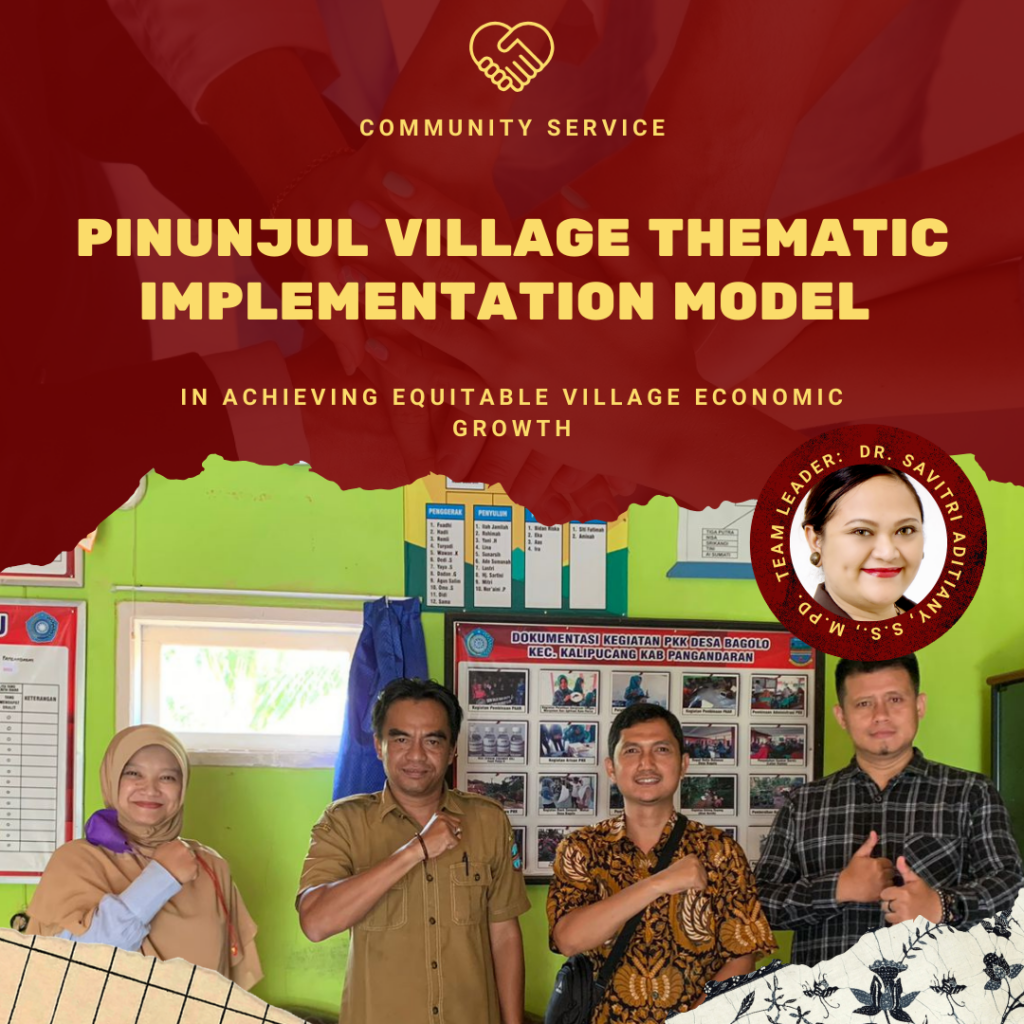
In the pursuit of building a stronger nation, the role of villages cannot be overstated. They are the frontline, addressing local issues, meeting grassroots needs, and contributing to broader national goals. However, with 60% of Indonesia’s population residing in villages, challenges like high dropout rates and health issues, such as malnutrition and maternal risks, persist. These issues are compounded by economic challenges, contributing to an increase in the country’s poverty rate.
Recognizing the need for a village-centric approach, Pangandaran District is championing village-based development. This aligns with the vision for the district’s progress, aiming to distribute well-being more equitably. The district faces significant hurdles like unemployment and poverty, making village development acceleration a crucial agenda. To achieve this, there’s a need for a strategic development plan that maximizes local strengths and potentials.
Revitalizing the village’s role in development is not just a local priority but a national policy driving economic growth. Pangandaran, known for its nature-based tourism, places villages at the heart of regional development. A shining example is Batu Karas, a village in Pangandaran District with exceptional tourism potential and unique strengths, including Katapyak Beach, rich in natural seaweed, a potential export commodity.
Batu Karas is aiming high, aspiring to be a standout village in Pangandaran District by leveraging its local strengths. Excellence for the village means engaging in economic activities that boost productivity, which, in turn, can stimulate development in nearby villages. Establishing an excellent village is not just about local characteristics; it’s a strategy to expedite regional development. The goal is to provide a legal foundation for planning and implementing village-focused development in Pangandaran District.
The focus is on villages with distinct advantages in economic, social, and cultural aspects that can be harnessed to become local economic strengths. For Batu Karas, located in Kalipucang Sub-District, Pangandaran District, the potential is immense, and it’s poised to be a standout village, elevating the overall quality of Pangandaran District as a premier tourist destination in West Java.
Team leader: Dr. Savitry Aditiany
Team members:
- Hasan Sidik, S.H., M.H.,
- Prof. Yanyan M Yani,
- Dr. Dudy Heryadi, 0012096301, FISIP
- Dr. Satriya Wibawa,
- Anggia Utami Dewi, Ph.D.,
- Dadan Suryadipura, S.IP.,